The Tasmanian devil is the largest surviving carnivorous marsupial. It has a squat, thick build, with a large head and a tail which is about half its body length. Unusually for a marsupial, its forelegs are slightly longer than its hind legs, and devils can run up to 13 km/h (8.1 mph) for short distances.. The Tasmanian devil is named for the Australian island-state of Tasmania, its only native habitat. Vaguely bearlike in appearance and weighing up to 12 kg (26 pounds), it is 50 to 80 cm (20 to 31 inches) long and has a bushy tail about half that length. The coat is mainly black, and there is a whitish breast mark; sometimes the rump and sides.
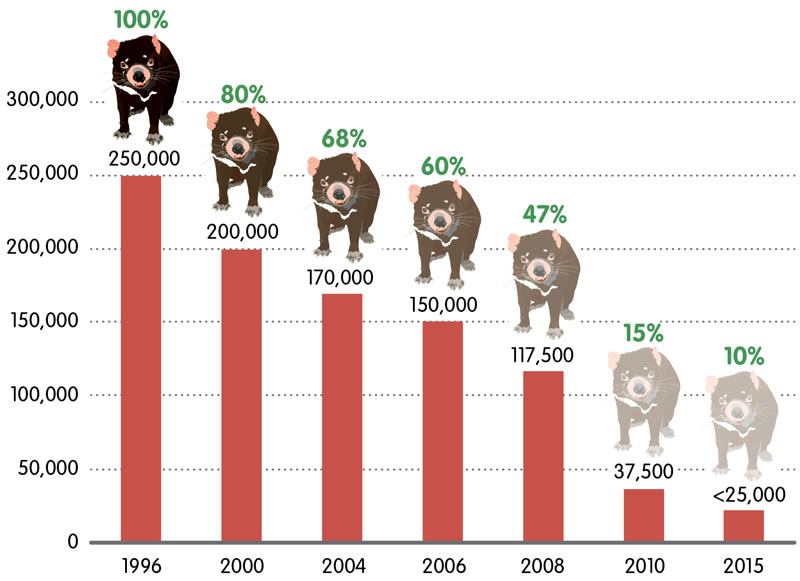
About the Tasmanian Devils Tasmanian devils

Tasmanian Devil Labelled Diagram
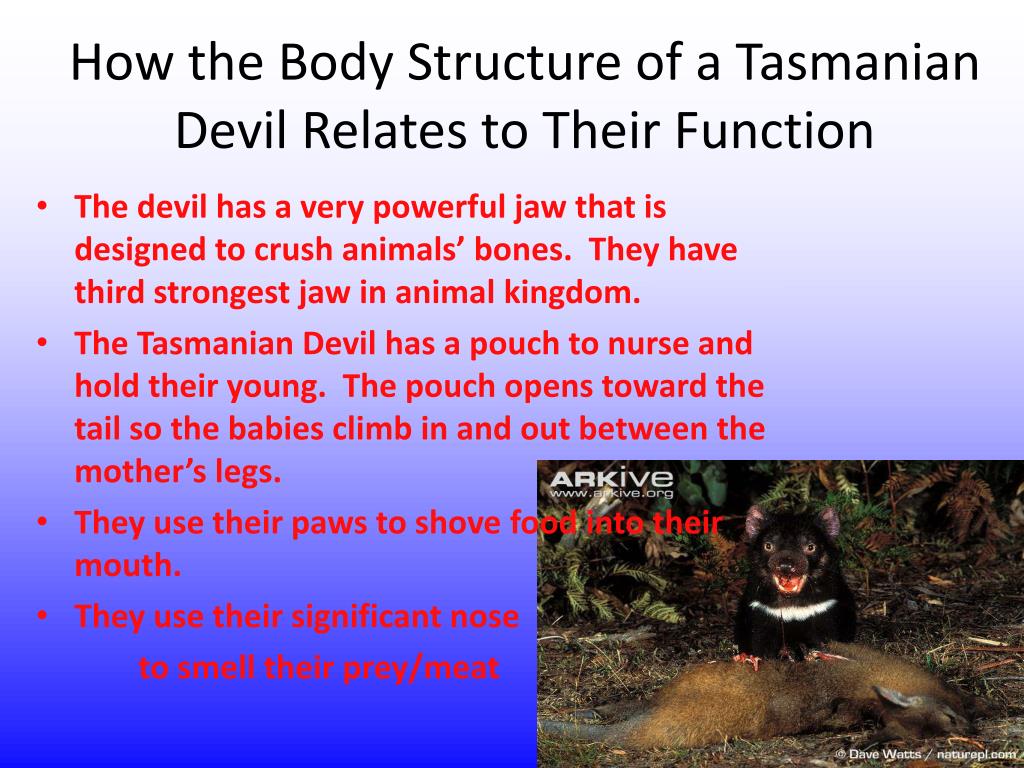
Tasmanian Devil Labelled Diagram

Tasmanian Devil Diagram

Tasmanian Devil Line Drawing

Sampling locations of Tasmanian devils sequenced for this study. A. The… Download Scientific
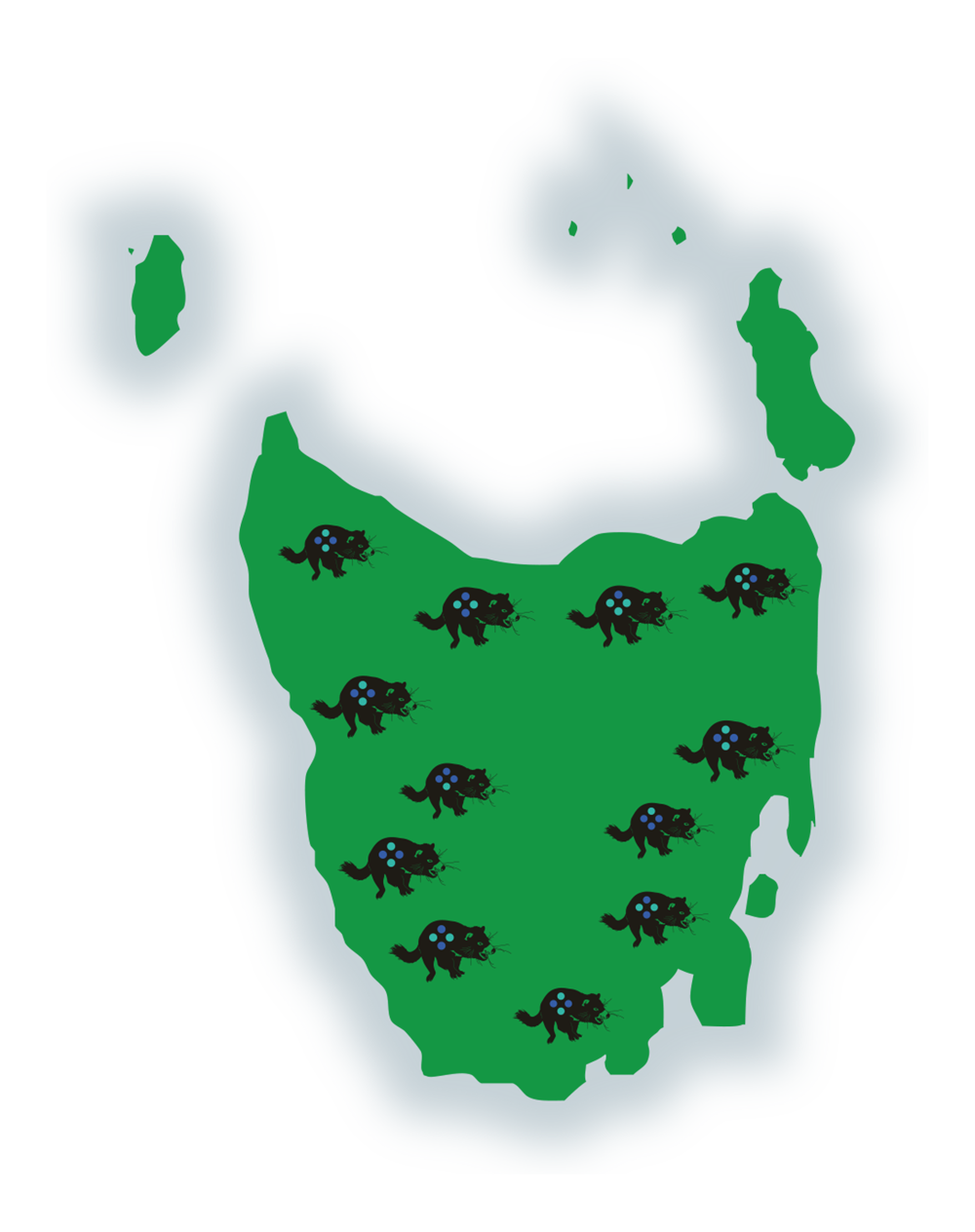
Tasmanian Devil Labelled Diagram

Proportion of Tasmanian devil individuals with different lifespan… Download Scientific Diagram

Tasmanian devil

Life cycle Tasmanian devils
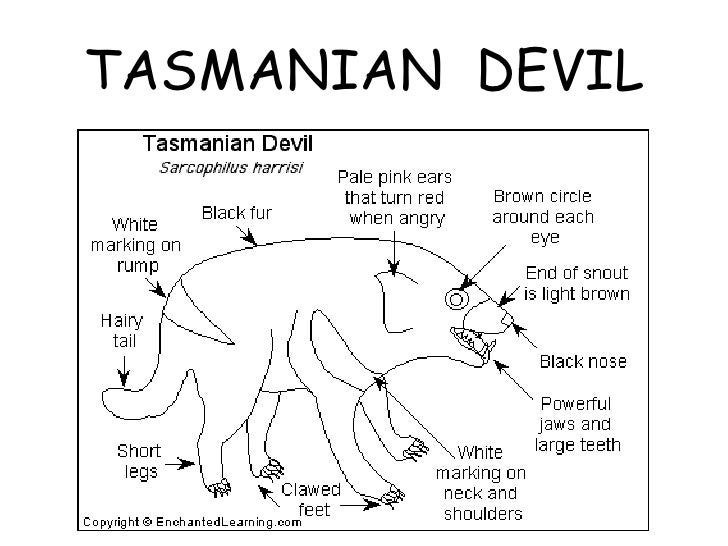
Parts of the body of Australian animals

Pin on Huesos
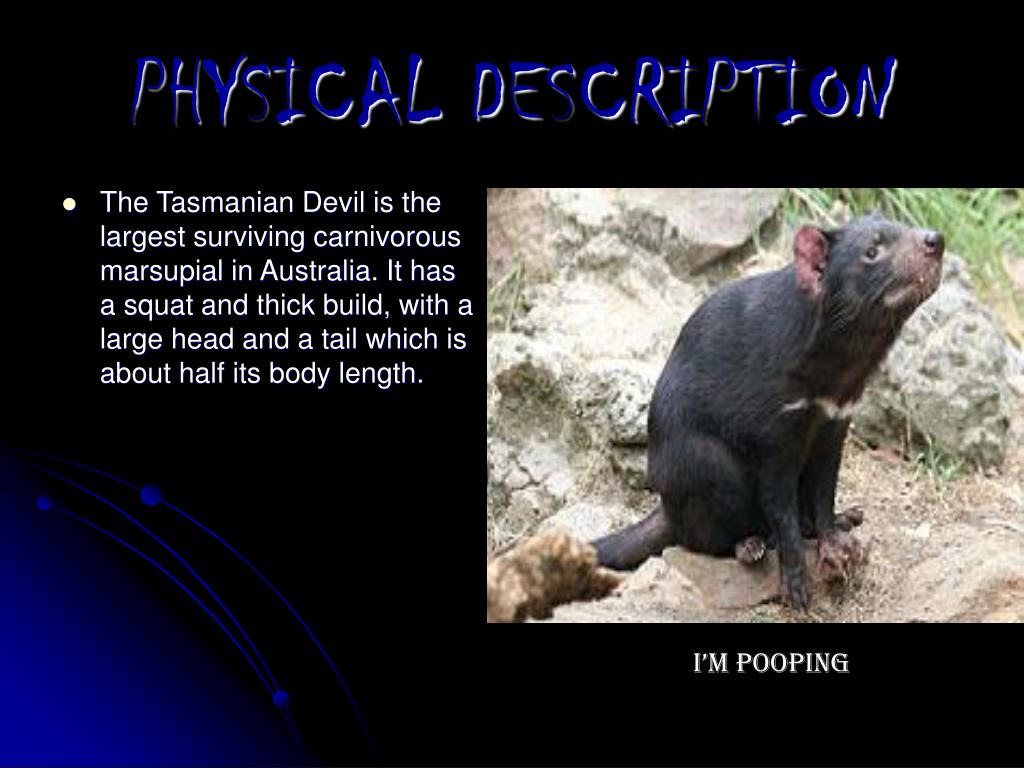
PPT TASMANIAN DEVIL PowerPoint Presentation, free download ID6230445
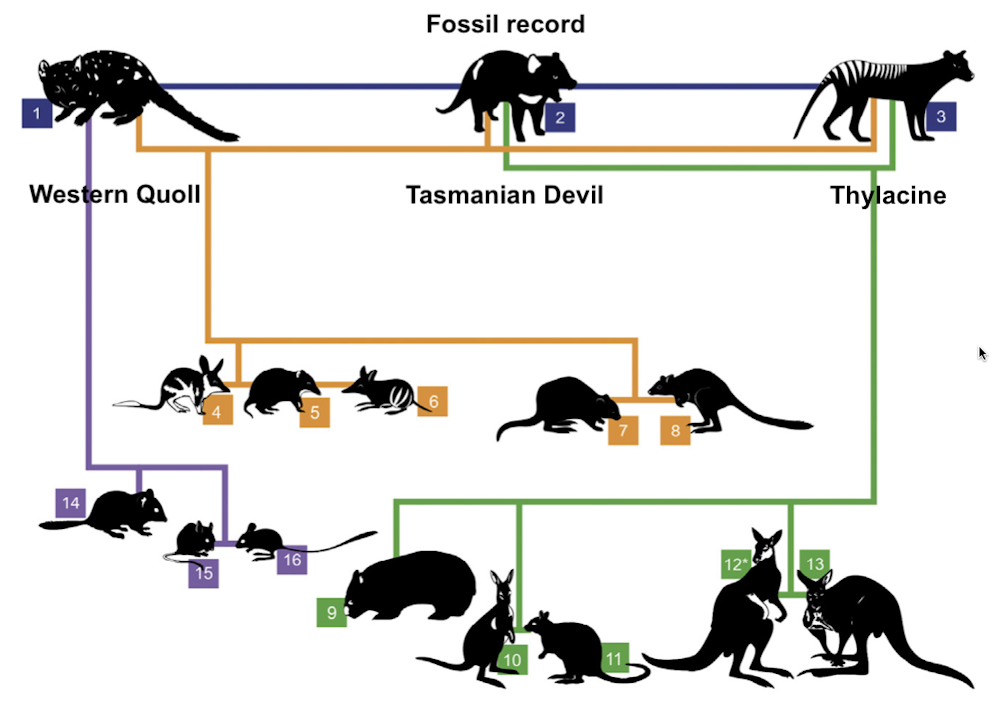
Tasmanian Devil Kevin’s Walk on the Wild Side
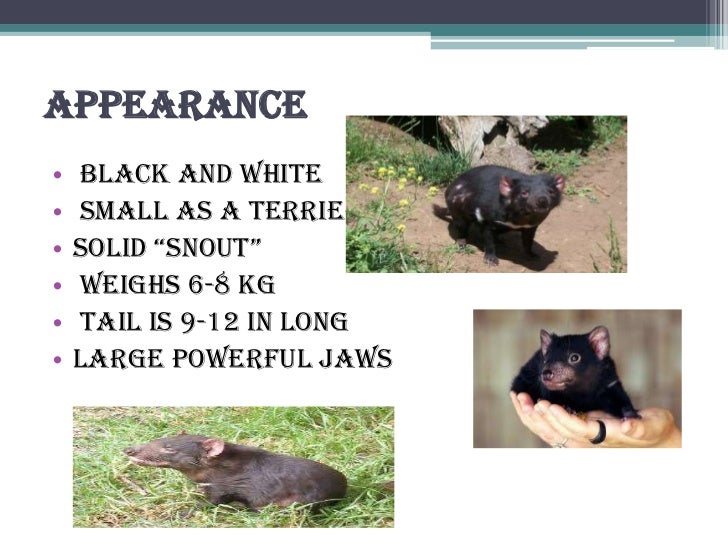
Life Cycle Of A Tasmanian Devil

Tasmanian Devil Exhibit Anders Alexander is a Designer
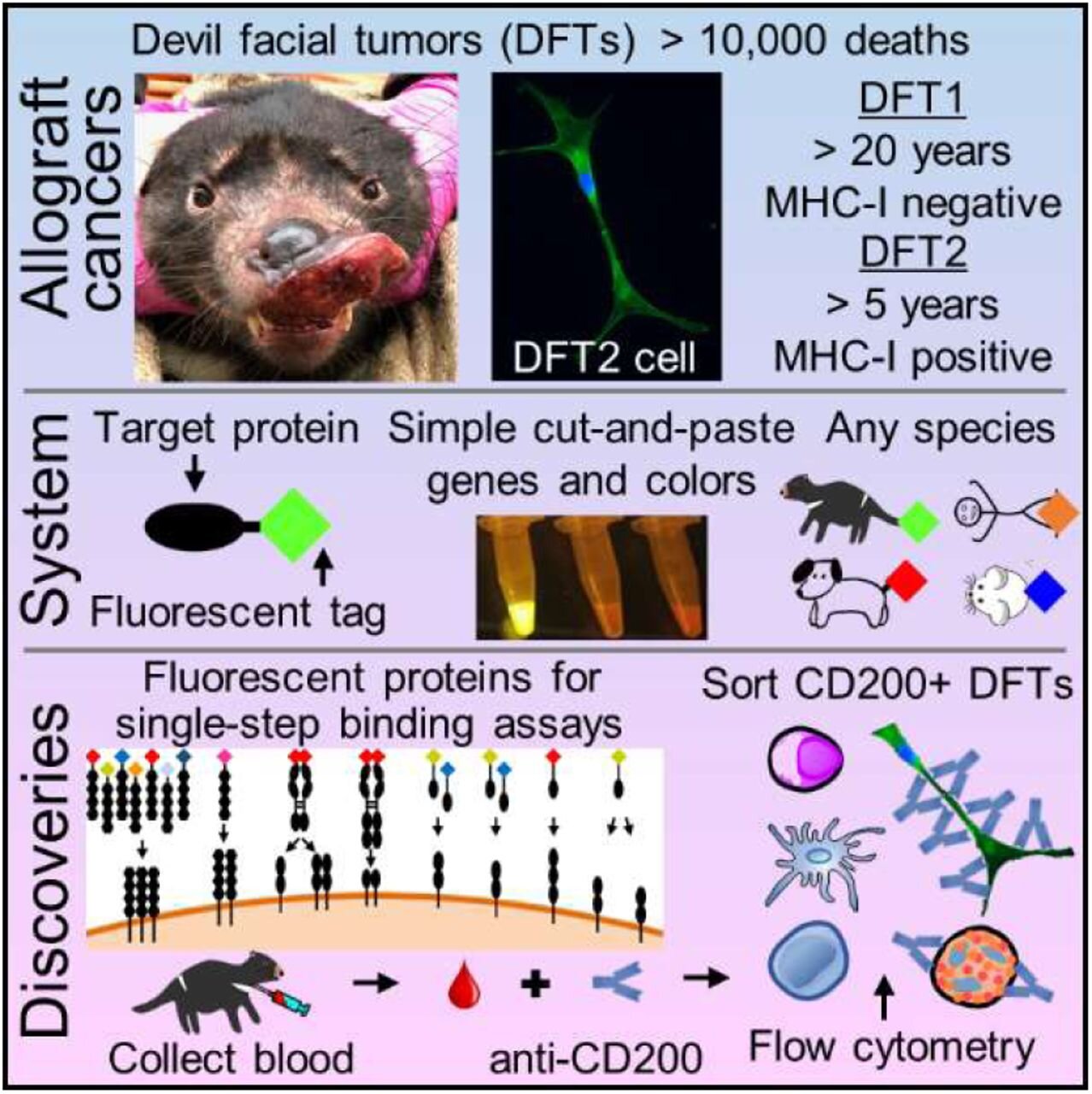
Tasmanian Devil Sarcophilus harrisii Page 2 Carnivora

Genome Sequencing and Analysis of the Tasmanian Devil and Its Transmissible Cancer Cell

Tasmanian Devil Labelled Diagram
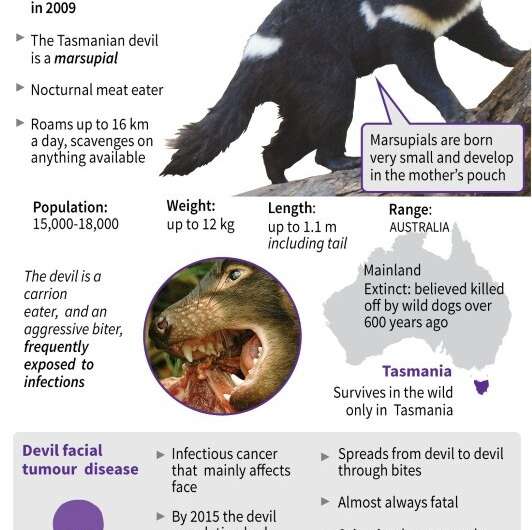
Tasmanian devils prove quick adaptors in bid for survival
Interspecies Interactions. These pages are part of the San Diego Zoo Global Library website. Our website provides access to zoo, animal, plant, conservation, and veterinary information resources. Although the site is open to the general public, librarian services and some resources are reserved for SDZ Global staff and volunteers.. Tasmanian devils are nocturnal animals, spending their days alone in hollow logs, caves, or burrows, and emerging at night to feed. They use their excellent sense of smell and sight to avoid predators and locate prey and carrion. They are voracious eaters and will consume everything—including hair, organs, and bones.


